Printable Vulture Mask

printable vulture mask for kids

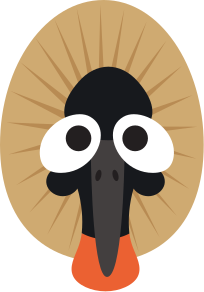
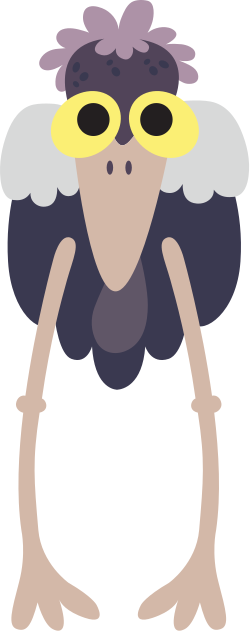
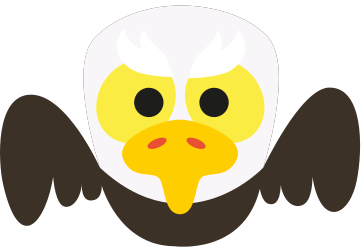
Bald head, enormous wingspan and one of the most important ecological roles in any ecosystem - our printable vulture mask deserves far more credit than it typically gets! The vulture is nature's most efficient recycler, and this mask captures that imposing, broad-winged, bald-headed magnificence brilliantly. Perfect for African animals school plays, birds of prey classroom projects, food chains and ecosystems topics, World Book Day, birthday parties, and impressively patient imaginative play.

The vulture is a brilliant subject for challenging preconceptions - most children initially think of it as a villain, but discovering it's actually an essential ecosystem engineer that prevents disease and recycles nutrients always changes minds. Every mask comes with a full colour version AND a black and white line art version for colouring in.

5 Interesting Facts About Vultures!

  • Vultures have stomach acid with a pH close to zero - more acidic than almost any other vertebrate, strong enough to destroy anthrax, botulism and cholera bacteria that would kill most other animals. They are living disease-prevention systems.
  • Their bald heads are a hygiene adaptation - feathers around the head would become matted with blood and bacteria when plunging inside carcasses, so bare skin is far more hygienic and easier to clean.
  • New World vultures (Americas) and Old World vultures (Africa, Europe, Asia) are not closely related - they're a remarkable example of convergent evolution, where unrelated animals independently evolved almost identical forms and lifestyles.
  • A group of vultures circling in the air is called a kettle - they use thermal air currents to soar with minimal wing effort, sometimes travelling hundreds of kilometres in a single day without a single wingbeat.
  • The decline of vultures in Asia caused a public health catastrophe - when vulture populations crashed by 99% due to a veterinary drug (diclofenac) in the 1990s, dog populations exploded feeding on unprocessed carcasses, leading to a massive increase in rabies cases.