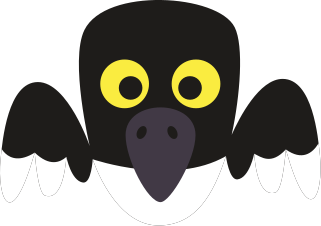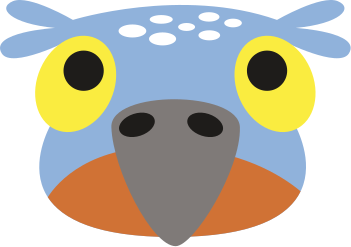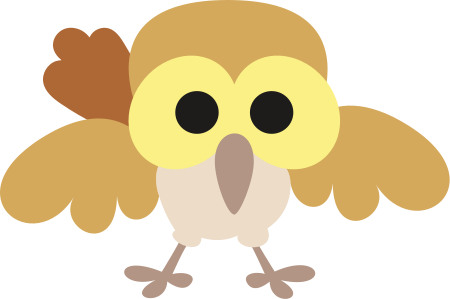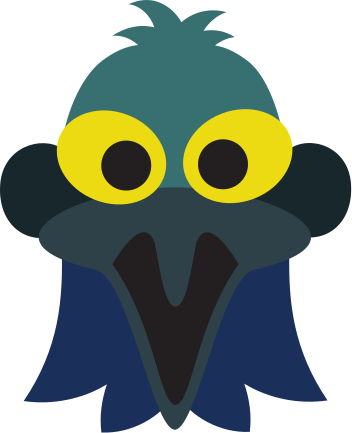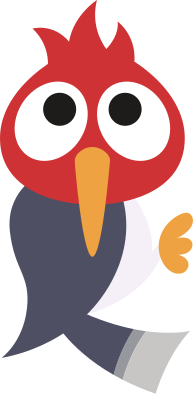
Printable Woodpecker Mask

printable woodpecker mask for kids

Rat-a-tat-tat! Our printable woodpecker mask celebrates one of Britain's most distinctive and exciting woodland birds! The great spotted woodpecker's dramatic black, white and red plumage and its rhythmic hammering on tree trunks make it one of the easiest woodland birds to both see and hear. Perfect for British wildlife school plays, woodland habitat classroom projects, World Book Day, birthday parties, and percussively enthusiastic imaginative play.

The woodpecker is a brilliant subject for animal adaptations topics - every single part of its anatomy, from its reinforced skull to its extraordinarily long tongue, is a masterpiece of evolutionary engineering designed around a single specialised lifestyle. Every mask comes with a full colour version AND a black and white line art version for colouring in.
5 Interesting Facts About Woodpeckers!

  • Woodpeckers drum up to 20 times per second without getting a headache - their skull has thick spongy bone with a special structure that distributes impact forces away from the brain, and their brain is oriented to minimise the effect of each impact.
  • Their tongue wraps around their skull - a woodpecker's tongue can extend up to 10cm beyond the tip of its bill, and when retracted it wraps around the back of the skull inside a special groove. It has a barbed tip and sticky saliva for extracting grubs.
  • Drumming is communication, not just feeding - woodpeckers drum on resonant surfaces (hollow trees, drainpipes, TV aerials) specifically to advertise territory and attract mates, choosing the loudest available surface for maximum effect.
  • They use their tail as a prop - stiff, pointed tail feathers brace against the tree trunk to support the woodpecker while it hammers, acting as a third leg in a tripod configuration with the two feet.
  • Woodpecker holes are vital for wildlife - over 30 species of British bird use old woodpecker nest holes, including owls, tits and nuthatches. Woodpeckers are keystone species in woodland ecosystems.